Survey fatigue is what happens when people get so many survey requests, or surveys so long and dull, that they stop answering them honestly. Or stop answering at all.
You've felt it from the other side. The post-purchase "quick 2 minute survey" that turns out to be 30 questions. The fourth NPS popup this week. At some point you just close the tab.
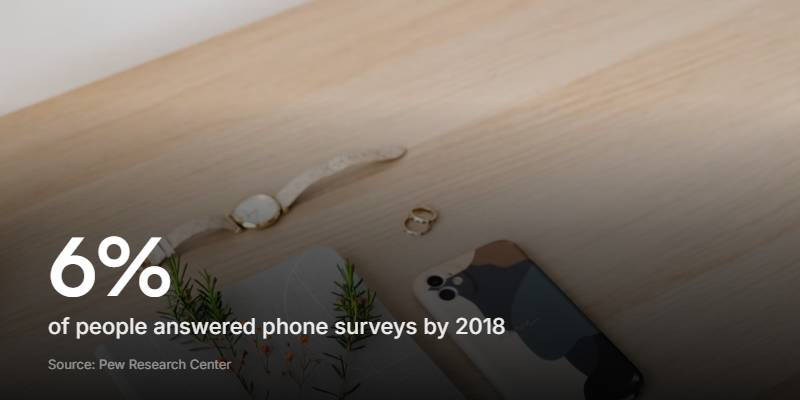
Your respondents do the same thing. And the data backs up how bad it's got: by 2018, the typical phone survey response rate had fallen to just 6%, according to Pew Research Center. People are tired of being asked.
This guide covers what survey fatigue actually is, how to spot it in your own data, what causes it, and how to fix it so people finish what you send them.
What is survey fatigue?
Survey fatigue is the drop in response quality and quantity that happens when people feel over-surveyed. It shows up in two ways.
Response fatigue is when someone gets too many survey requests and starts ignoring them. The emails go unopened. The links go unclicked. It's the steady drip of asks that wears people out, whatever any single survey is like.
Survey-taking fatigue is when a single survey is too long or too boring, so people quit partway through or rush the back half. They start strong, then click through the last ten questions just to make it stop.
Both end the same way: less data, and worse data. The answers you do get are shorter, less thoughtful, and skewed toward the few people stubborn enough to finish.
The signs you have a survey fatigue problem
You don't need a study to diagnose it. The symptoms are sitting in your own response data.
- Falling response rates. Fewer people start the survey each time you send it. The trend line only goes one way.
- Mid-survey drop-off. People begin, then bail. If most of your abandons cluster around the same question, that's where fatigue kicks in.
- Straightlining. Someone picks the same answer all the way down - every "4 out of 5", every "neutral". They're not reading, they're escaping.
- One-word open answers. Your text boxes come back with "fine" and "good" instead of anything you can use.
- Rising unsubscribes. People opting out of your emails after a survey send is a loud signal you're asking too much.
One or two of these is normal. All of them at once means your audience is done.
What actually causes survey fatigue
Fatigue isn't really about surveys being inherently annoying. It's about specific, fixable mistakes.
Too many surveys. The most common cause. Every team wants feedback, so the same customer gets hit from support, product, and marketing in the same month.
Too long. Every extra question raises the cost of finishing. A 25-question survey sent monthly is counterproductive, however good the questions are.
Irrelevant questions. Asking everyone everything, instead of only what applies to them, makes people feel like they're filling in paperwork that has nothing to do with them.
A boring format. A wall of identical text fields and 1-to-5 grids is a chore to look at, let alone complete. The format itself signals "this will be tedious".
Bad timing. A survey that lands mid-task, or weeks after the thing it's asking about, gets ignored. Timing is half the battle.
No visible payoff. This is the quiet killer. If the last survey someone filled in led to nothing, they won't bother with the next one. Most people don't believe their feedback changes anything, a problem we dig into in the employee engagement survey guide.

Why survey fatigue is getting worse in 2026
Survey fatigue has been creeping up for years. AI just poured fuel on it from two directions at once.
First, it's never been easier to make a survey. Anyone can generate a 40-question questionnaire in seconds and blast it to a list. More surveys, sent more often, by more teams. The volume going into people's inboxes has gone up, so the patience coming back out has gone down.
Second, AI is now filling surveys in too. Bots and incentive-farmers run through forms to collect rewards, and large language models can complete an open-text survey that reads perfectly human. Teams that spot junk in their data often respond by adding more screening questions and sending more follow-ups, which tires out the real respondents even faster.
So the old fix - "just write better questions" - isn't enough anymore. The format and the experience have to do more of the work.
How to avoid survey fatigue
The goal is simple: ask less, make it feel lighter, and prove it was worth it. Here's how.
Ask less, less often. Cut your survey to the few questions you'll actually act on. If a question won't change a decision, drop it. Then space your sends out and coordinate across teams so one person isn't surveyed five times a month. Our customer feedback form guide covers how to pick the moments that actually matter.
Make every question earn its place. Before you add a question, ask what you'd do differently based on the answer. No answer, no action, no question.
Show one question at a time. Breaking a form into single-question screens feels far lighter than a wall of fields. It works: Typeform's analysis of 2.6 million forms found this conversational format averages a 47.3% completion rate, against an industry average of 21.5%. More on the format in our conversational form guide.
Make it engaging, not just a grid. The same Typeform report found forms with images or video saw a 120.6% jump in completions over plain ones. A bit of personality and visual variety keeps people moving through.
Let people talk instead of type. A lot of fatigue is typing fatigue. Asking someone to record a quick voice or video answer is faster for them and gives you richer feedback than a rushed sentence in a text box.
Time it right. Send the survey close to the moment it's about, while the experience is fresh, and when the person has a spare minute, not mid-checkout.
Close the loop. Tell people what the last round of feedback changed. Nothing earns the next response like proof the last one mattered.

When a video survey beats a text survey (and when it doesn't)
Switching to a more engaging, video-friendly format isn't always the right call. Be honest about the fit.
It's a strong choice when you want depth: open feedback, testimonials, user research, exit interviews. Hearing someone explain why, in their own words and tone, beats a star rating you have to guess at. People also tend to give more when the form feels like a conversation than when it feels like a spreadsheet.
It's the wrong call for a few cases. A single quick NPS score doesn't need video. Sensitive or anonymous surveys can feel more exposing on camera, so give a text option. And internal forms a team fills in every day should stay fast and boring on purpose.
Rule of thumb: if you just want a number, use a quick text question. If you want to understand the why behind it, let people talk. Video earns its place when the reason matters more than the rating.
Clipform is built for the first kind. Forms run one question at a time, respondents can answer by text, voice, or video recorded straight in the browser, and every audio and video answer is transcribed automatically so you're not stuck rewatching clips. You can describe the survey you want and have it generated for you, then tweak the questions. It won't fix a survey you send too often, but it makes the ones you do send much easier to finish.
Build a survey people actually finish
Survey fatigue isn't a mystery. People are asked too much, too often, in a format that feels like work, and they rarely see it pay off. Fix those four things and your response rates recover.
Start small. Cut your next survey in half, show it one question at a time, and give people the option to talk instead of type. Then tell them what changed because they bothered to reply.
If you want a form that feels like a conversation rather than a chore, give Clipform a try - it's free to build your first one.
Common questions about survey fatigue
What is survey fatigue in simple terms? It's when people get so many survey requests, or surveys so long, that they stop answering properly or stop answering at all. The result is fewer responses and lower-quality ones.
What causes survey fatigue? Mainly being surveyed too often, surveys that run too long, irrelevant questions, a tedious format, bad timing, and never seeing feedback lead to change.
How do you reduce survey fatigue? Send fewer, shorter surveys, ask only questions you'll act on, show one question at a time, make the format engaging, time it well, and close the loop by sharing what changed.
How long should a survey be? As short as you can make it while still getting what you need. For most feedback and customer surveys, five questions or fewer keeps completion high. Length, not topic, is the biggest driver of drop-off.