A self-tape audition is a video recording of an actor performing the audition material, known as the sides, on their own camera in a quiet, well-lit room, then submitting the finished file digitally to a casting director instead of auditioning in person. It replaced the in-person first-round audition for most of the entertainment industry during the pandemic, and for actors it is now the default way to get in front of casting directors for the first time.
The format is deceptively simple: read the sides, record yourself, send it in. But the gap between a self-tape that gets watched and one that gets skipped is enormous. Casting directors receive hundreds of submissions per role. Most get less than 15 seconds before the next one plays. Your tape needs to be right from the first frame - technically clean, well-lit, properly framed, and performed like you mean it.
This guide covers how to set up your recording space, what casting directors actually look for, the SAG-AFTRA rules that now protect actors from unreasonable self-tape demands, and how to submit your tape without the file-sharing workarounds that waste everyone's time.
What you need for a self-tape setup
You don't need a professional studio. You need a clean space, decent light, and a phone that was made in the last five years. Here's the minimum viable setup.
Camera and tripod
Your phone camera is fine. Seriously. Casting directors aren't judging production value - they're judging your performance. A modern smartphone shoots in at least 1080p, which is well above the 720p minimum that SAG-AFTRA requires.
What you do need is a tripod or stable mount. Handheld footage is immediately distracting. A $15 phone tripod from Amazon works. So does a stack of books with your phone leaning against a wall. The bar is stability, not expense.
Lighting
This is where most self-tapes fall apart. Bad lighting makes you look washed out, shadowy, or unflattering, and it makes it harder for casting to see your expressions.
The fix is usually free: face a window. Natural light from the front is the most flattering, most consistent option. Film during the day with the window in front of you (behind the camera). If natural light isn't available or reliable, a ring light ($20-50) placed directly in front of you at eye level does the job.
Avoid overhead lighting alone - it creates harsh shadows under your eyes. And never film with a window behind you. It turns you into a silhouette.
Background
Plain and neutral. A solid-coloured wall in grey, white, or light blue is ideal. No posters, no bookshelves, no laundry pile. The background should be so boring that nobody notices it.
If you don't have a clean wall, a collapsible backdrop ($30-60) solves the problem. Some actors use a bedsheet pinned to the wall. It works if it's wrinkle-free and evenly lit.
Sound
Test your audio before every recording session. The built-in phone microphone works in a quiet room. If you have ambient noise (traffic, HVAC, neighbours), a clip-on lavalier microphone ($15-30) makes a noticeable difference.
Record in the quietest room you have. Bathrooms have good acoustics but bad echo. Closets are surprisingly effective - the clothes absorb sound reflections.
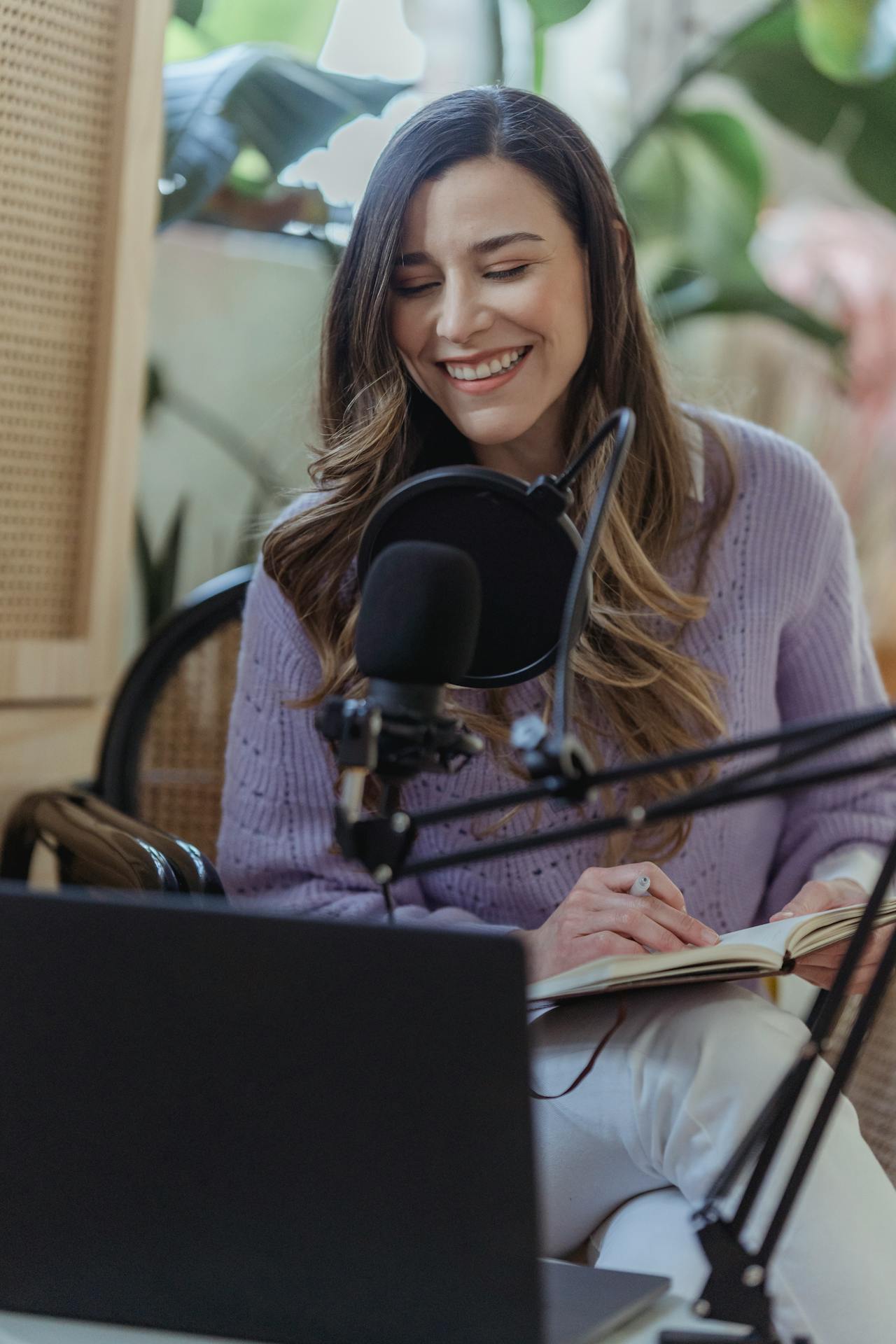
How to frame and record your self-tape
Framing
The standard self-tape frame is a medium close-up: top of your head to mid-chest, with your eyes in the upper third of the frame. This is close enough to see facial expressions and far enough to catch upper body movement.
Shoot in landscape (horizontal) unless the casting notice specifies portrait. Most casting platforms and playback systems are built for landscape. SAG-AFTRA's 2024 rules now allow portrait-mode full-body shots, but the default expectation is still landscape for scene work.
Leave some headroom (space above your head) but not too much. If the ceiling is visible, you're too far away or framed too low.
Eye line
Look at a spot just to the left or right of the camera lens, not directly into it. You're talking to a scene partner, not the audience. Place your reader (the person reading the other character's lines) right next to the camera so your eye line is close to centre without breaking the fourth wall.
If you don't have a reader, AI scene partner apps like ScenePartner and Linus can read the other lines back to you. Casting directors generally accept AI readers - they care about your performance, not who's feeding you cues.
The slate
Start every self-tape with a brief slate: your name, the role you're reading for, and optionally your height and location. Keep it under 10 seconds. Be warm, be natural, don't overthink it. The slate isn't a performance - it's a label.
Recording
- Do multiple takes. Submit your best one. If you can't decide between two, submit both. Most casting directors prefer seeing options.
- Don't edit between takes. Let each take run as one continuous recording. Cutting within a take looks like you're hiding a flubbed line.
- Check your playback. Watch the recording on your phone before moving on. Check audio levels, lighting, framing, and whether your face is in focus. Reshooting takes five minutes. Discovering a problem after submission takes a callback you won't get.
Performance tips that casting directors actually give
These come up repeatedly in interviews with casting directors and acting coaches.
Don't try to guess what they want. Casting director Mel Mack's advice: "Don't try to give us what you think we want to see." Make a specific, committed choice and perform it. A strong wrong choice is more interesting than a safe, generic read.
Start strong. You have seconds, not minutes. The first few lines of your read need to establish your take on the character. If you're building slowly to a big moment at the end, most casting directors will never see it.
Treat the camera like a scene partner. The energy that works on stage is too big for a self-tape. Film performance is smaller, more internal. Your eyes do most of the work. Let them.
Don't over-prepare to the point of stiffness. Know the material well enough to be present, not so well that you're reciting. If it sounds memorised rather than lived-in, it reads as mechanical on camera.
Do something with the space. Sitting rigidly in a chair for two minutes is less interesting than a read where you occasionally shift, react physically, or use a simple prop. Movement shows you're in the scene, not just reading lines.
SAG-AFTRA self-tape rules
If you're a SAG-AFTRA member (or auditioning for union projects), the 2024 contract introduced specific protections for self-tape auditions. These came out of the November 2023 strike settlement with the AMPTP.
| Rule | What it means |
|---|---|
| 48-hour minimum turnaround | Producers must give actors at least 48 hours to prepare and submit a self-tape. Weekends and holidays don't count toward that window |
| Script page limits | Initial auditions are capped at a maximum number of pages. No more 15-page cold reads for a first-round tape |
| No memorisation required | You can use the sides while recording. Producers can't require you to perform off-book |
| 720p minimum resolution | That's it. No 4K requirements, no specific equipment mandates |
| No multi-angle or multi-setup requirements | Producers can't demand multiple camera angles, elaborate setups, or specific editing |
| Portrait mode allowed | Full-body shots can be filmed in portrait orientation |
| In-person alternative | Producers must offer an in-person or virtual audition option if an actor doesn't want to self-tape, with accommodations for seniors, minors, and actors with disabilities |
These rules exist because self-tape demands had been escalating. Before the 2024 contract, some productions were asking actors for multiple takes at different angles, full wardrobe changes, and turnarounds of less than 24 hours - all unpaid.
No compensation for self-tapes. One thing the 2024 contract didn't change: actors still aren't paid for the time spent recording and submitting self-tapes. This remains a point of contention in the industry, particularly as first-round in-person auditions (which were compensated through the SAG-AFTRA process) have been largely replaced by uncompensated self-tapes.
How to submit your self-tape
This is where the process breaks down for a lot of people.
Casting notices usually specify a submission method: email an MP4, upload to a platform like Casting Networks or Backstage, or share via a Google Drive or WeTransfer link. The problem is that each production and casting office has different requirements, and actors end up juggling multiple file-sharing accounts, oversized email attachments that bounce, and links that expire.
For casting offices and production companies receiving submissions, the problem is the reverse: hundreds of emails with different file formats, naming conventions, and quality levels. No easy way to compare, filter, or organise.
A better approach
Instead of asking actors to email files or share drive links, some casting teams now use structured audition submission forms. The actor visits a link, enters their details, records or uploads their tape, and submits everything in one flow. Every submission arrives in the same format, in the same place, ready to review. It is the same shift dancers and voice actors have made: dance auditions and voice acting demo reels now run through the same kind of form.
Clipform is built for exactly this. You can set up an audition submission form where actors enter their name and the role they're reading for, then record their self-tape directly in the browser - no file uploads, no external links. Every submission lands in a dashboard where casting teams can play tapes side by side, read auto-generated transcripts, and filter by role. If you're running a casting call and collecting self-tapes, it replaces the email and file-sharing chaos with a single link.
Mistakes that get your tape skipped
Casting directors are explicit about what makes them move on:
- Bad audio. If they can't hear you clearly, they skip. Echo, background noise, and low volume are the most common offenders.
- Poor lighting. Dark, shadowy, or backlit footage hides your expressions. Casting can't evaluate what they can't see.
- Wrong framing. Too far away (they can't see your face), too close (your forehead is cut off), or shot from below (unflattering angle). Medium close-up, camera at eye level.
- No slate. Some casting directors will skip an unslated tape entirely because they can't identify you quickly in a stack of hundreds.
- Over-editing. Jump cuts, background music, fancy transitions, colour grading. These signal that the performance can't stand on its own. Keep it raw.
- Ignoring the brief. If the casting notice says "no props, grey background, landscape," follow it exactly. Deviation reads as either carelessness or defiance, neither of which books roles.
- Sending a massive file. A 2GB uncompressed video that takes five minutes to download tests everyone's patience. Compress to a reasonable file size while keeping quality clean.