
A vox pop, also called a street interview or a "man on the street" interview, is exactly what it sounds like: you stop people in public, point a camera at them, and ask a question. The appeal is the realness - unscripted reactions you can't fake in a studio.
The catch is that they're slow. You stand on a corner for three hours to get four usable clips, and half the time the audio is ruined by a passing bus.
This guide covers how to film street interviews that actually land - the questions, the approach, the gear - and then how to collect the same kind of candid video answers remotely, without spending your afternoon on the pavement.
What is a vox pop?
A vox pop is a short, unscripted interview filmed with members of the public, usually on one simple question or theme. You've seen the format everywhere: a host with a microphone asking strangers what they think about something, cutting the best reactions into a fast, punchy video.
The name is short for the Latin vox populi, "voice of the people." It goes by others too: "man on the street" is the old broadcast term, and "street interview" is the plain-English one. They all mean the same format: real people, real reactions, no script.
It works because it's believable. A polished testimonial reads like an ad. A stranger laughing at your question on a busy street reads like the truth.

Why street interviews are everywhere right now
This format is having a moment. Scroll TikTok or YouTube for five minutes and you'll hit a dozen of them - opinion questions, taste tests, "how much do you pay in rent" street segments.
There's a reason they're winning in 2026. Audiences have turned against over-produced content. Handheld, lo-fi, one-question-on-the-street videos now tend to outperform glossy edits, because they feel real and they're cheap to make at volume. The barrier to entry is a phone and a decent question.
For brands, that's the opening. You don't need a production company to run a street-interview campaign. You need a good question and a way to collect enough answers that the great ones rise to the top.
How to film a street interview
The quality of a street interview is decided before you press record. Here's what matters.
Plan your questions
Walk out with your questions written down. Start with something easy and low-stakes to warm people up, then ask the one you actually care about. Keep each question short enough to answer in a sentence or two.
- One clear theme per session, not five unrelated questions
- Open questions, so people say more than yes or no
- A warm-up first ("nice day, isn't it?") before the real question
- A fallback or two ready, in case the main question falls flat
Approach people without being weird
Most of the job is getting a stranger to say yes. Smile, be quick about who you are and what you're doing, and make it clear there's no wrong answer. NBCU Academy's guide to street interviews puts it well: be transparent and friendly, and people are far more likely to play along.
Expect a lot of nos. That's normal. If you need three good clips, plan to talk to a dozen people or more.
The gear you actually need
You can shoot a street interview on a phone. If you want it to look a notch more professional, the upgrade that matters most isn't the camera, it's the audio.
- A handheld mic (a cardioid mic cuts out side noise) does more for quality than any lens
- Keep the sun behind you so it lights the subject's face
- Watch your background noise - step away from traffic if you can
- Film vertically if it's going to TikTok, Reels, or Shorts
Keep it short
People stop watching long clips fast. Get in, get the reaction, get out. A single strong sentence beats a rambling thirty seconds every time.
Street interview questions that get good answers
The question makes or breaks the video. Good ones are simple, a little provocative, and easy for anyone to have an opinion on. Some starting points:
| Type | Example question |
|---|---|
| Opinion | "What's the most overrated thing in [your city]?" |
| Confession | "What's a small thing you'll never spend money on?" |
| Hot take | "Pineapple on pizza - yes or no, and why?" |
| Local | "What should every visitor here do at least once?" |
| Numbers | "How much do you think this costs?" (then reveal) |
Avoid anything that needs a long explanation or makes people look stupid. The best street interview questions give a shy person an easy, fun answer and give a confident person room to run.
The catch: street interviews don't scale
Here's the honest tradeoff with the classic format. It's slow, and it doesn't scale.
To get three usable clips you might stop fifteen people. You're tied to one location, at the mercy of the weather, and you can only be in one city at a time. If you want opinions from customers across the country, the pavement approach falls apart.
You also lose people who'd happily answer but won't do it on a busy street with a stranger holding a mic in their face.
How to run street interviews remotely
There's a way to get the same candid, on-camera answers without standing on a corner: ask the question as a video prompt and let people record their reply wherever they are.
It's not a literal replacement. You give up the spontaneity and the location backdrop. What you get instead is reach - you can put one question in front of hundreds of people across any city, and collect their video answers at a scale a single afternoon could never match.
This is what Clipform is built for. You record your question as a short video prompt, share one link, and people reply with a video, a voice note, or text. Every spoken answer is transcribed automatically, so you can skim a hundred responses and pull the gold without rewatching them all.
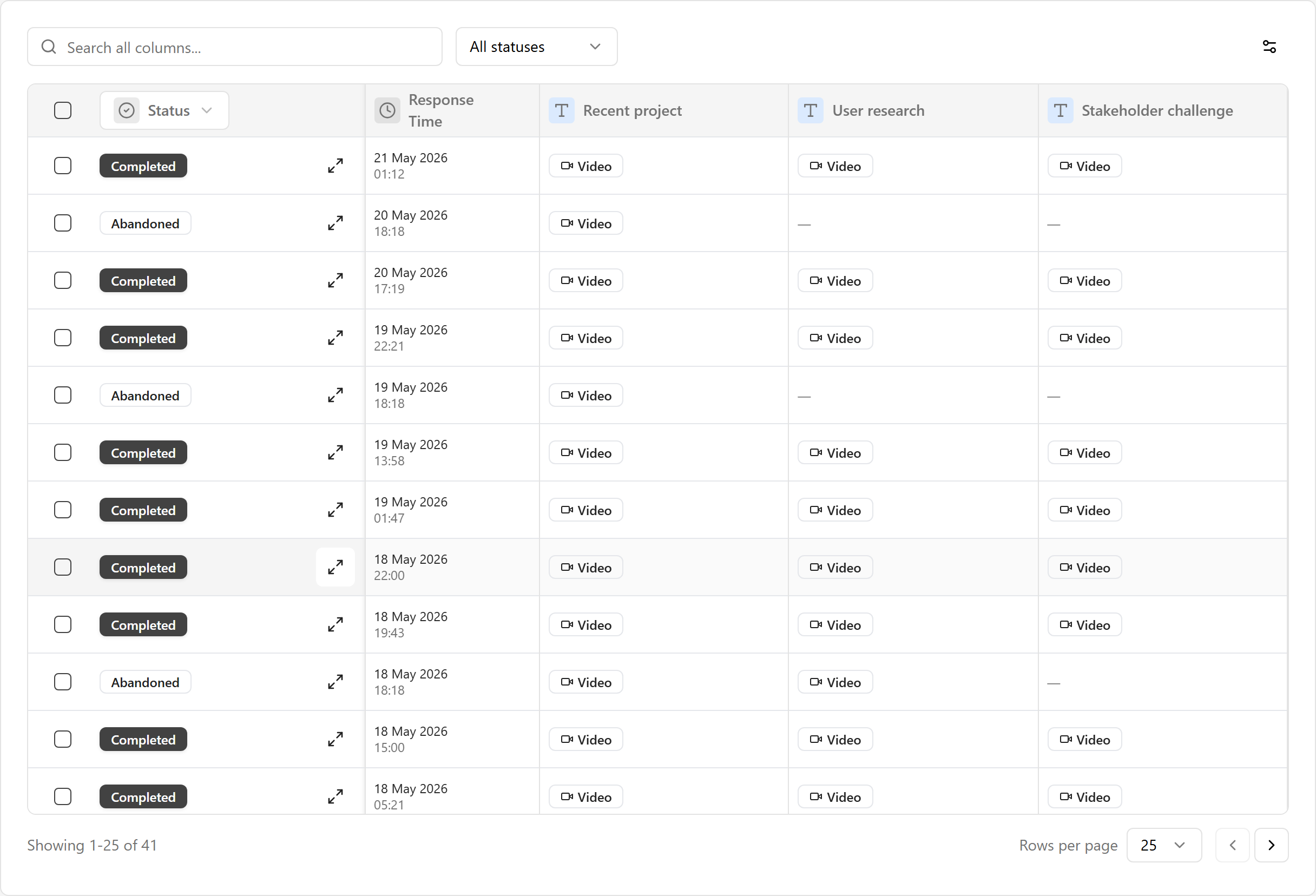
It's the same engine behind collecting video testimonials and async video interviews - one question out, many candid video answers back. It's also how journalists run source interviews and vox pops without booking a single call. For a vox-pop campaign, you get the volume to find the genuinely funny or surprising takes, which is the whole point of the format.
In person or remote?
Both have their place. Pick based on what the clip needs to do.
| Classic street interview | Remote video answers | |
|---|---|---|
| Spontaneity | High - real reactions in the moment | Lower - people record on their own time |
| Location feel | Strong (the street is part of the shot) | None |
| Reach | One spot, one day | Anywhere, any number of people |
| Cost and time | A full afternoon for a few clips | Minutes to set up, answers roll in |
| Best for | Hero clips with energy and place | Volume, range of voices, specific audiences |
If you want a punchy hero video with real street energy, hit the street. If you want a wall of opinions from a specific audience, collect them remotely. Plenty of campaigns use both.
How to set one up remotely
If you want to try the remote version, it takes about five minutes:
- Write one strong question - the same rules as on the street: simple, open, a little provocative.
- Record it as a video prompt so it feels like you're asking them directly.
- Share the link wherever your audience is - email, social, a QR code on a flyer.
- Let answers come in as video, voice, or text, transcribed automatically.
- Pull the best clips and cut them together like any street segment.

You can build one on Clipform for free, and respondents don't need an app or an account - they just tap the link and talk.
FAQ
What is a street interview?
A street interview is a short, unscripted interview filmed with members of the public, usually around one question or theme. It's also called a "man on the street" interview or a vox pop. The format is popular because the reactions are candid and believable in a way scripted content isn't.
What questions should you ask in a street interview?
Keep them simple, open, and a little provocative - something anyone can have an opinion on in a sentence. Opinion questions ("what's the most overrated thing here?"), hot takes, and guess-the-number setups work well. Start with an easy warm-up question before the one you actually care about.
What equipment do you need for a street interview?
A phone is enough to start. The upgrade that matters most is audio - a handheld cardioid microphone does more for quality than a better camera. Keep the sun behind you to light the subject, watch for background noise, and film vertically if it's going to TikTok, Reels, or Shorts.
How do you do street interviews without going outside?
Ask your question as a short video prompt and let people record their answers remotely. You lose the spontaneity and the street backdrop, but you can reach far more people and collect candid video answers at scale. Tools like Clipform record the prompt, share it as a link, and transcribe every reply.
How many people do you need to interview?
Plan for a lot more than you'll use. A rough rule is to talk to four or five people for every clip you want in the final cut, since many will decline or give flat answers. Collecting answers remotely changes the math - you can gather dozens at once and keep only the best.
Get your first answers today
Street interviews work because real people are more convincing than any script. The classic format gets you energy and a sense of place; the remote version gets you reach and volume. Most strong campaigns borrow from both.
If the pavement approach has been holding you back, start with the part that scales. Write one good question, record it, and send it to the people whose opinions you actually want.
You can set that up on Clipform in about five minutes, for free, and watch the candid answers come back the same day.